About Me

I am a neuroinformatics researcher specialising in brain-computer interfaces, neural dynamics, and perceptually-aligned AI systems. My work bridges computational neuroscience with deep learning to build AI that perceives temporal structure through oscillatory dynamics — the same mechanisms humans use to process rhythm, music, and motion.

As founder of DedAI-Neurodynamics, I developed a computational framework implementing Neural Resonance Theory models (ASHLE, GrFNN) for real-time rhythm perception, achieving 94.37% Phase-Locking Value retention in a trained TCN surrogate with sub-50 ms latency. I replicated the musician/non-musician entrainment difference (p=0.0158) and extended the framework to cross-modal visual perception (r=0.91). My research was presented at Queen Mary University of London's DMRN+18 conference, and I have consulted with Dr Marcus Pearce (QMUL) on music cognition methodology.

I hold a First Class Honours degree in Music: Production, Performance and Enterprise from the University of Westminster, where I conducted EEG research examining differential emotional processing between musicians and non-musicians under ethics approval ETH2324-0744. I am applying to Queen Mary University of London's MSc Sound and Music Computing (AI and Music Data Science stream) for September 2026, with the intention of continuing to doctoral research in neural dynamics and perceptually-grounded AI.

Research Interests

  • Neural Dynamics Icon

    Neural Dynamics

    Oscillatory entrainment and synchronisation mechanisms underlying the perception of temporal structure in auditory and visual stimuli.

  • BCI Icon

    Brain-Computer Interfaces

    Real-time EEG signal processing for closed-loop systems that map cognitive biomarkers to computational parameters.

  • Cross-modal Icon

    Cross-Modal Perception

    Multimodal signal processing and self-supervised learning for cross-modal representation between auditory and visual domains.

  • Perceptual AI Icon

    Perceptually-Aligned AI

    Building AI systems grounded in biophysical models of human perception using physics-informed neural networks.

Publications & Presentations

  • DedAI Paper

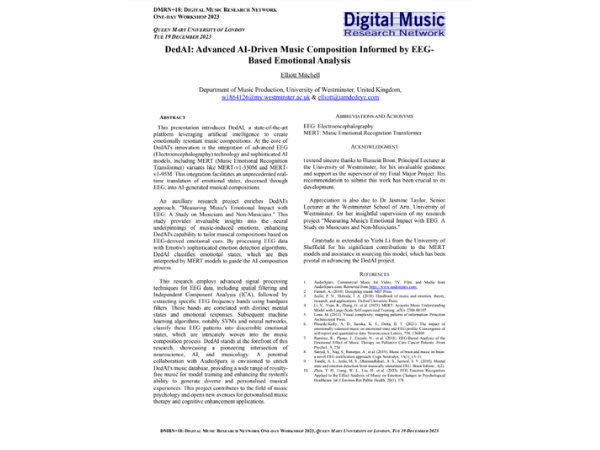
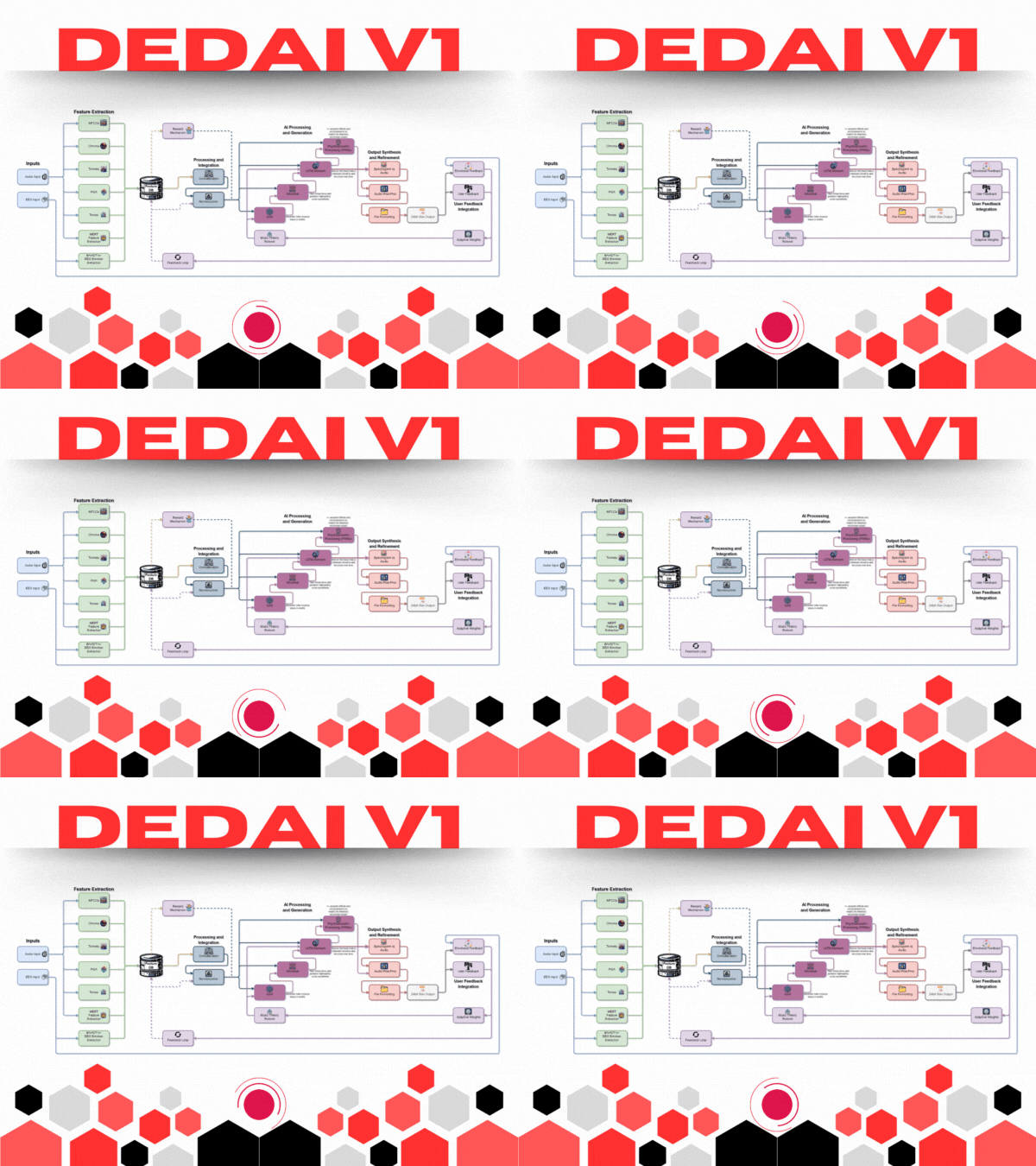
    DedAI: AI-Driven Music Composition (2024)

    Advanced AI-Driven Music Composition Informed by EEG-Based Emotional Analysis. Undergraduate Research Paper, University of Westminster.

  • EEG Study

    EEG Study: Musicians vs Non-Musicians (2024)

    Measuring Music's Emotional Impact with EEG: A Study on Musicians and Non-Musicians. Undergraduate Research Thesis, University of Westminster. Supervisor: Dr Jasmine Taylor.

  • DMRN+18

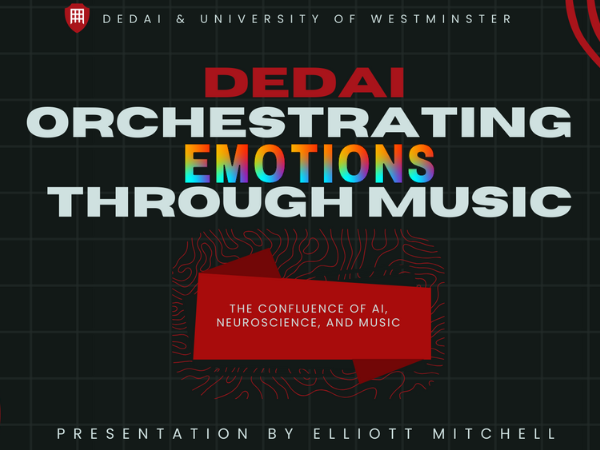
    DMRN+18 @ Queen Mary (2023)

    Orchestrating Emotions: The Intersection of AI, Neuroscience & Music. 20-minute invited talk at the Digital Music Research Network Conference, Queen Mary University of London.

Key Research Metrics

  • 94.37%

    PLV Retention

  • <50ms

    Real-time Latency

  • r=0.91

    Cross-modal Correlation

  • p=0.0158

    Musician/Non-Musician

  • 14-ch

    EEG Channels

Resume

Education

  1. BA (Hons) Music: Production, Performance and Enterprise — First Class Honours

    University of Westminster | 2021 – 2024

    Final Major Project (73%): Early version of DedAI — AI-driven music composition system using real-time EEG signal processing.
    Research Project (74%): Quasi-experimental EEG study on emotional processing of music in musicians vs non-musicians (supervisor: Dr Jasmine Taylor).
    Relevant modules: Advanced Audio Production, Music Production Studio and Live, Recording Techniques, Creative Identities and Making Digital Content, The Freelance Music Professional.
    Self-directed study: Digital Signal Processing, Computational Neuroscience, Machine Learning, Neural Resonance Theory.

Research Experience

  1. DedAI-Neurodynamics — Founder & Lead Researcher

    2023 – Present

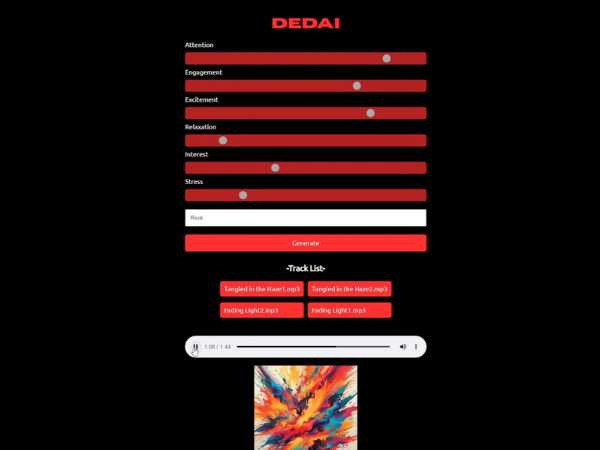
    Developed a computational framework bridging Neural Resonance Theory and deep learning to build AI systems that perceive temporal structure through oscillatory dynamics. The project implements biophysically-grounded models for rhythm perception and translates EEG-derived emotional states into generative music synthesis.

    • Implemented ASHLE (Adaptive Synchronisation with Hebbian Learning and Elasticity) and GrFNN (Gradient Frequency Neural Network) models for oscillatory entrainment and beat perception
    • Trained a Temporal Convolutional Network (TCN) surrogate with physics-informed loss achieving 94.37% Phase-Locking Value retention, enabling real-time inference while preserving neural entrainment dynamics
    • Built a closed-loop Brain-Computer Music Interface (BCMI) using Emotiv EPOC X (14-channel EEG), mapping cognitive biomarkers to oscillator parameters in real-time (<50ms latency)
    • Developed PyNRT — an open-source Python toolkit for simulating Hopf oscillators, gradient frequency neural networks, and adaptive oscillator models
    • Extended framework to cross-modal visual perception, demonstrating video-to-audio entrainment where motion energy drives ASHLE rhythm synthesis (r=0.91 correlation for periodic stimuli)
    • Created digital twin simulations of EEG hardware for algorithm prototyping without physical sensors
  2. EEG Study: Musicians vs Non-Musicians — Primary Investigator

    2023 – 2024

    Conducted a mixed-methods quasi-experimental study examining differential emotional processing of music between musicians and non-musicians using EEG. Grounded in Meyer's Expectancy Theory and Juslin & Västfjäll's BRECVEMA model of music-induced emotions.

    • Collected and analysed 14-channel EEG data from 6 participants using Emotiv EPOC X in naturalistic listening conditions; processed with MNE-Python, ICA artifact rejection, and FFT band power analysis
    • Found significant beta wave (12–30 Hz) differences in frontal regions (AF3, AF4, F3, F4, F7, F8) indicating heightened cognitive engagement in musicians during musical expectation violation (p=0.0158)
    • Created visualisations including topographical brain maps, radar graphs, and hierarchical edge bundling diagrams using PyVis and Matplotlib
    • Consulted with Dr Marcus Pearce (QMUL) on methodology and theoretical framework; discussion informed integration of schematic and dynamic expectation mechanisms
    • Obtained full ethics approval (ETH2324-0744) from the University of Westminster Research Ethics Committee

Professional Experience

  1. Pinnacle Crew — Freelance AV Crew / Technical Assistant

    2021 – 2024

    Assisted with AV setup, signal routing, and system configuration for live events at London venues. Worked under tight turnaround times across multiple cross-functional crews, gaining practical exposure to live sound, staging, and event production workflows.

  2. Macoral Services — AI & Web Development Consultant

    2022 – 2024

    Developed and deployed a custom AI chatbot and quote calculator, achieving approximately 30% reduction in client response time. Translated complex technical requirements into accessible business tools for non-technical stakeholders.

Technical Skills

Programming: Python (PyTorch, NumPy, SciPy, MNE-Python), C++ (real-time DSP), JavaScript/TypeScript, MATLAB

Signal Processing: EEG acquisition, spectral analysis (FFT, wavelets), ICA, bandpass filtering, Phase-Locking Value computation, event-related potentials, oscillatory dynamics modelling

Machine Learning: Temporal Convolutional Networks (TCNs), Physics-Informed Neural Networks (PINNs), self-supervised learning, multimodal representation learning, time-series classification, generative models

Tools & Platforms: Git, Docker, Jupyter, VS Code, React, Three.js, Node.js, Emotiv SDK, OpenBCI, PyVis, Matplotlib, librosa, soundfile

Contact

Get in Touch

I am applying to QMUL's MSc Sound and Music Computing for September 2026 and am open to research collaborations, conversations, and opportunities in neural dynamics, brain-computer interfaces, and perceptually-aligned AI. Feel free to get in touch.

Email: elliott.mitchell10@gmail.com

LinkedIn: linkedin.com/in/dedeye

GitHub: github.com/HawkSP

Location: Rotherham, UK

Academic References

Hussein Boon — Principal Lecturer, University of Westminster
Supervisor for Final Major Project; advised on DedAI development and recommended submission to DMRN+18.

Dr Jasmine Taylor — Senior Lecturer, Westminster School of Arts
Supervised EEG research thesis: "Measuring Music's Emotional Impact with EEG: A Study on Musicians and Non-Musicians."